


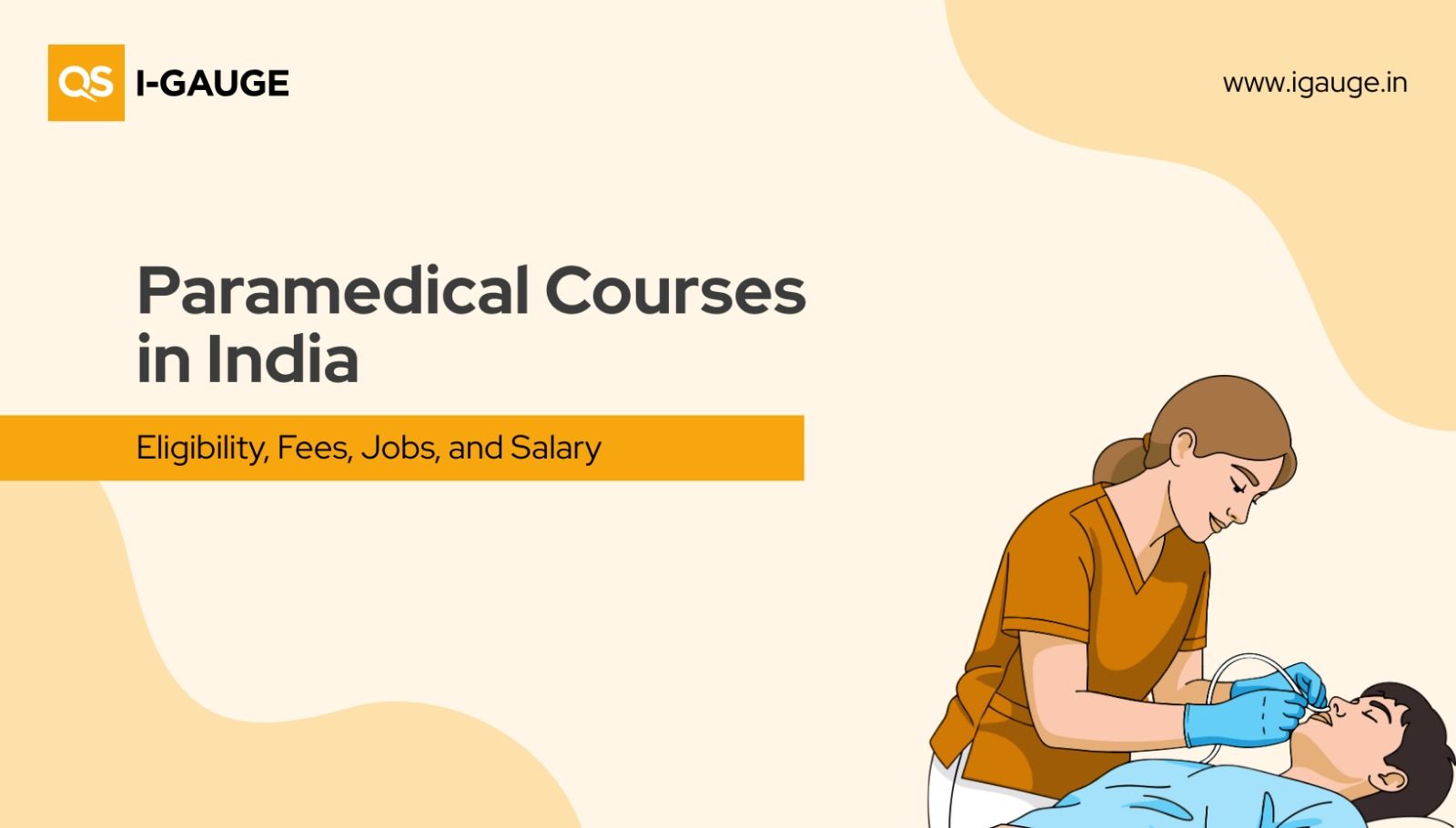
A paramedical course is a professional healthcare program that equips students to work in allied medical settings and support healthcare professionals in handling technical, diagnostic, therapeutic, and emergency care. The courses are designed to provide specialised and job-oriented training in preparation for various segments of the medical field.
Some of the common specialisations
1. Physiotherapy (BPT)
2. Operation Theatre Technology
3. Radiology & Imaging Technology
4. Laboratory Technology
5. Dialysis Technology
6. Medical Microbiology
7. Operation Theatre Technology (OTT)
8. Medical Laboratory Technology (MLT)
9. Medical Radio Imaging Technology
10. Anesthesia Technology
11. Optometry
12. Pharma
13. Respiratory Therapy
14. Hospital Administration
15. Nursing Assistance
Eligibility
The courses can be taken up as a bachelor’s degree, a diploma, and certifications after 10th or 12th grade. A Bachelor’s degree (B.Sc.) can be pursued after class 12 with a PCB (Physics, Chemistry, and Biology) background and lasts for 3-4 years; it involves an in-depth understanding and specialisations. Diploma courses are between 1 to 2 years, and certificate courses are short-term and focus on specialised training.
Course Fees
The fees significantly vary between government and private institutions. In government colleges, the fees can vary between Rs. 2500 and Rs. 10,000 per annum, and between Rs. 50,000 and Rs. 10,00,000 for the entire course, in private institutions. Diploma programs typically cost approximately Rs. 35,000 to Rs. 40,000 per semester, while bachelor’s programs usually have annual fees of about Rs. 60,000. Postgraduate paramedical programs may range from Rs. 40,000 to Rs. 5,00,000 or higher. Certificate programs can range between Rs. 10,000 and Rs. 35,000 (total course fees).
Career Scope and Salary
The career prospects after the course completion are expanding in India due to rapid growth in the healthcare infrastructure and increased public health awareness. Paramedical professionals can work in hospitals (both government and private), clinics, diagnostic centres and laboratories, nursing homes, emergency care units, community health centres, rehabilitation units, research institutes, etc.
For entry-level candidates, salary can range between Rs. 15,000 and Rs. 35,000 per month. Roles in the public sector offer better pay and allowances, for instance, a paramedical professional working in Indian Railways can earn up to Rs. 44,900 per month, with perks and allowances. Salaries can see a steep increase with specialisations, experience, and the hospital’s reputation.
Benefits of a Paramedical Degree, Diploma or Certification
a. Students can choose from a range of areas and specialisations in the healthcare industry.
b. The course offers comprehensive training that can support modern medical practice.
c. It is a suitable career path for those who wish to contribute to society through their work and those seeking healthcare roles other than doctors.
d. As the healthcare sector grows due to rising demands, professionals find an array of choices in both public and private sectors.
Conclusion
A paramedical course in India prepares the students through a solid balance of theoretical knowledge and hands-on skills to immediately take up passionate roles in the healthcare industry.






.svg)

.svg)
.svg)